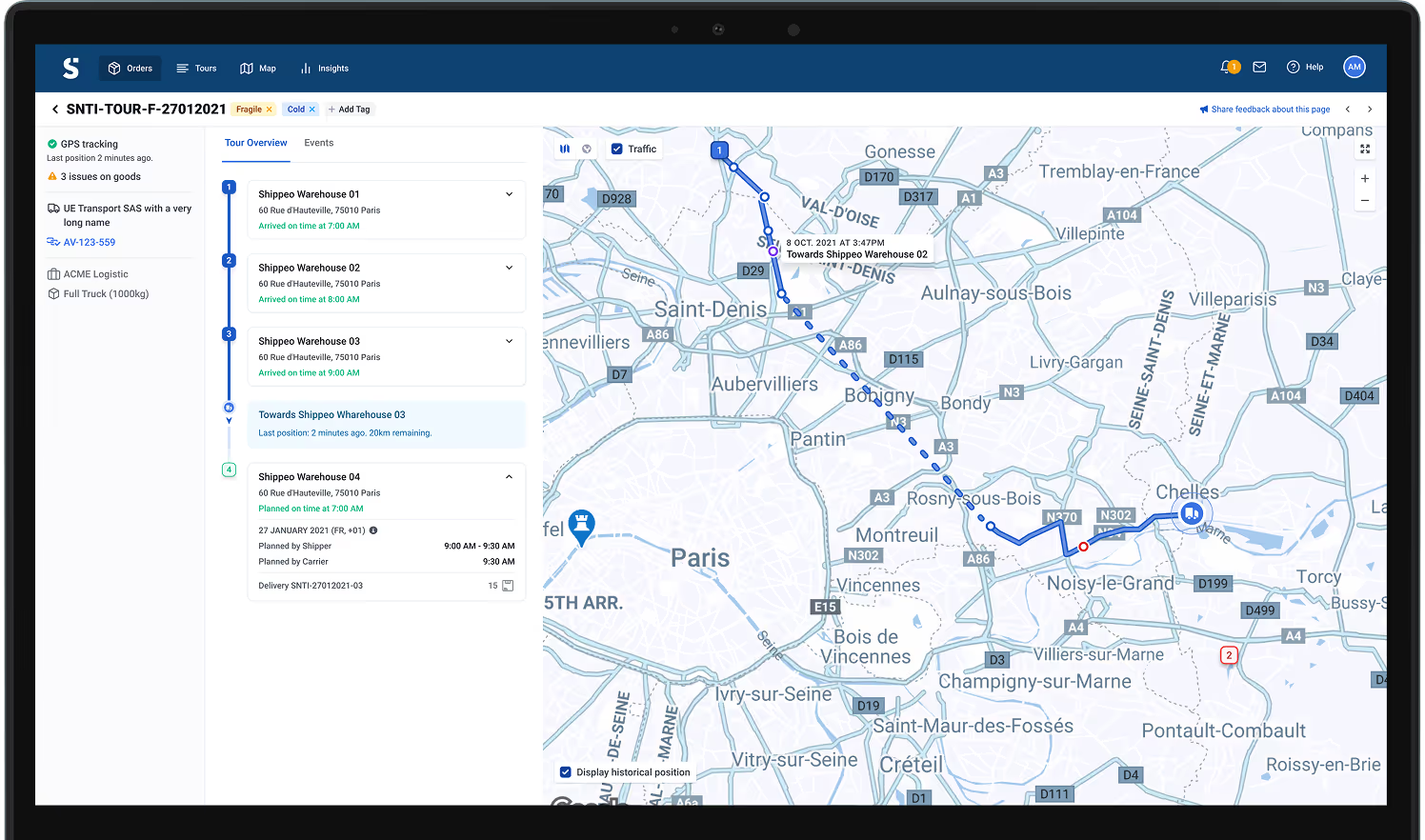
Connected eCMR Management
Digitize the consignment note and connect documentation to transport execution. Shippeo eCMR helps shippers, carriers, and consignees create, share, sign, and manage compliant transport documents throughout the shipment lifecycle.
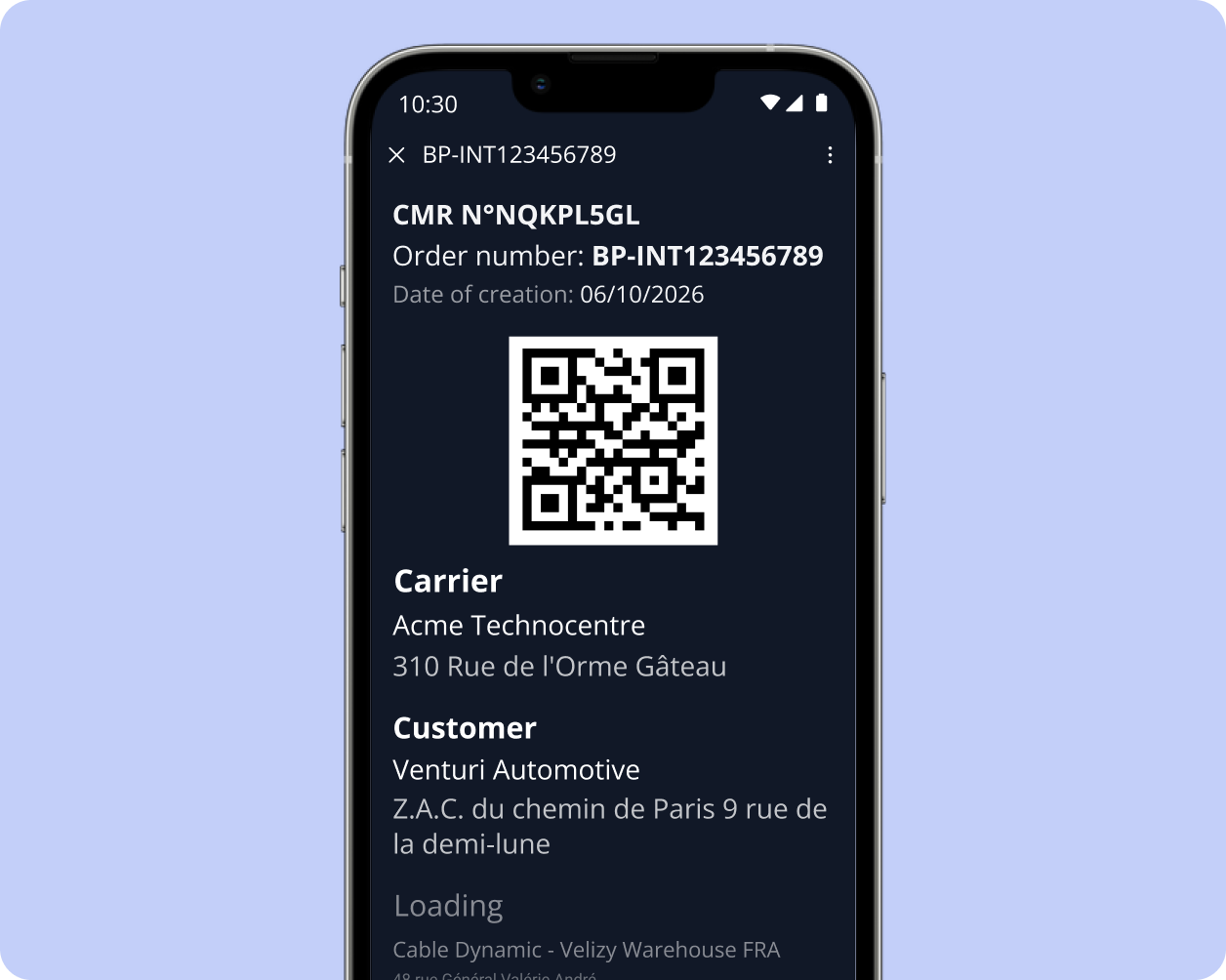
Up to €13
saved per consignment note
Up to 1.5%
transport budget savings
Weeks to minutes
for invoicing readiness
Go beyond document digitization
Transform your consignment note into a trusted execution record connected to transport operations.
Digitize your consignment notes
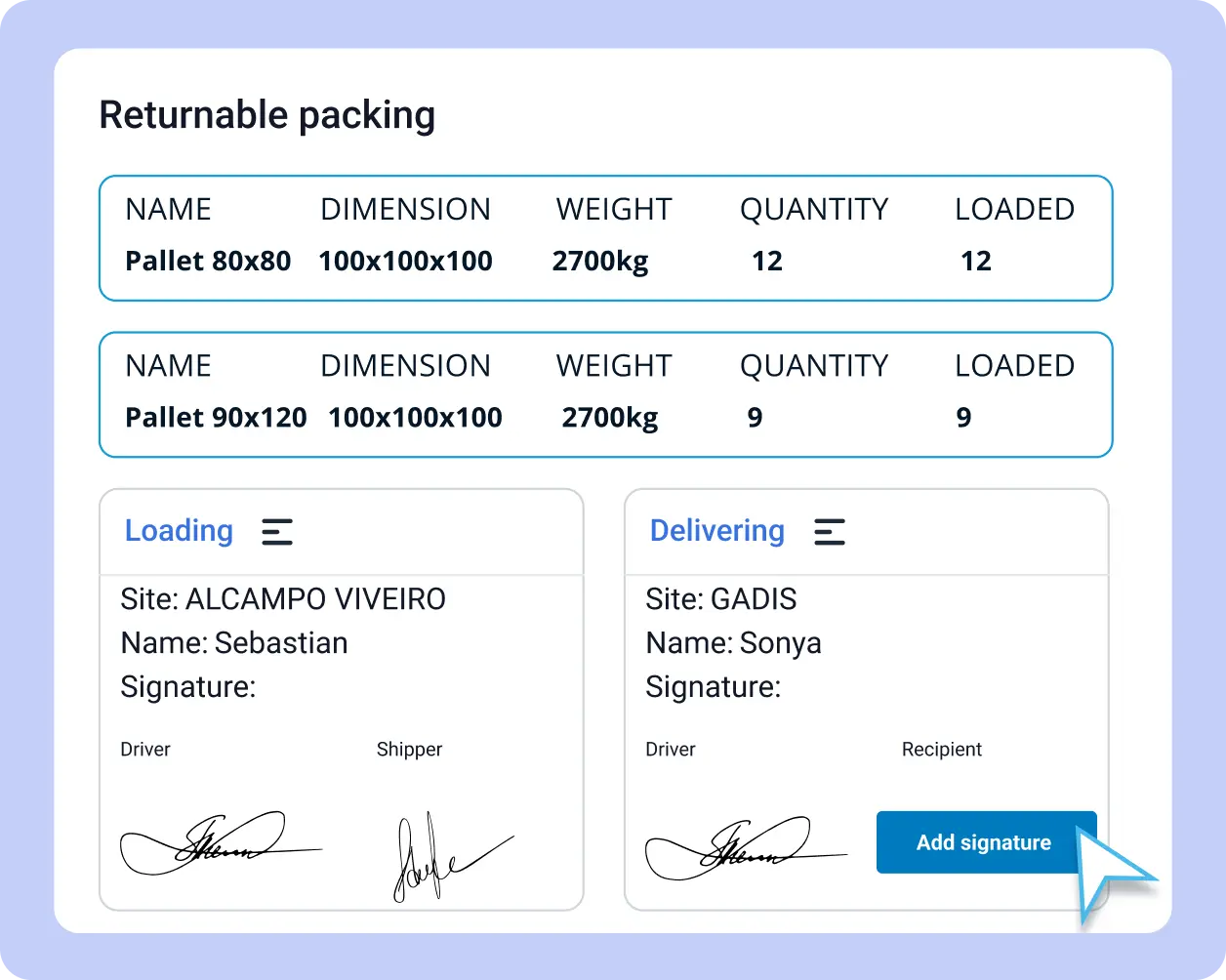
Create, share, sign, and manage compliant electronic consignment notes in one connected workflow.
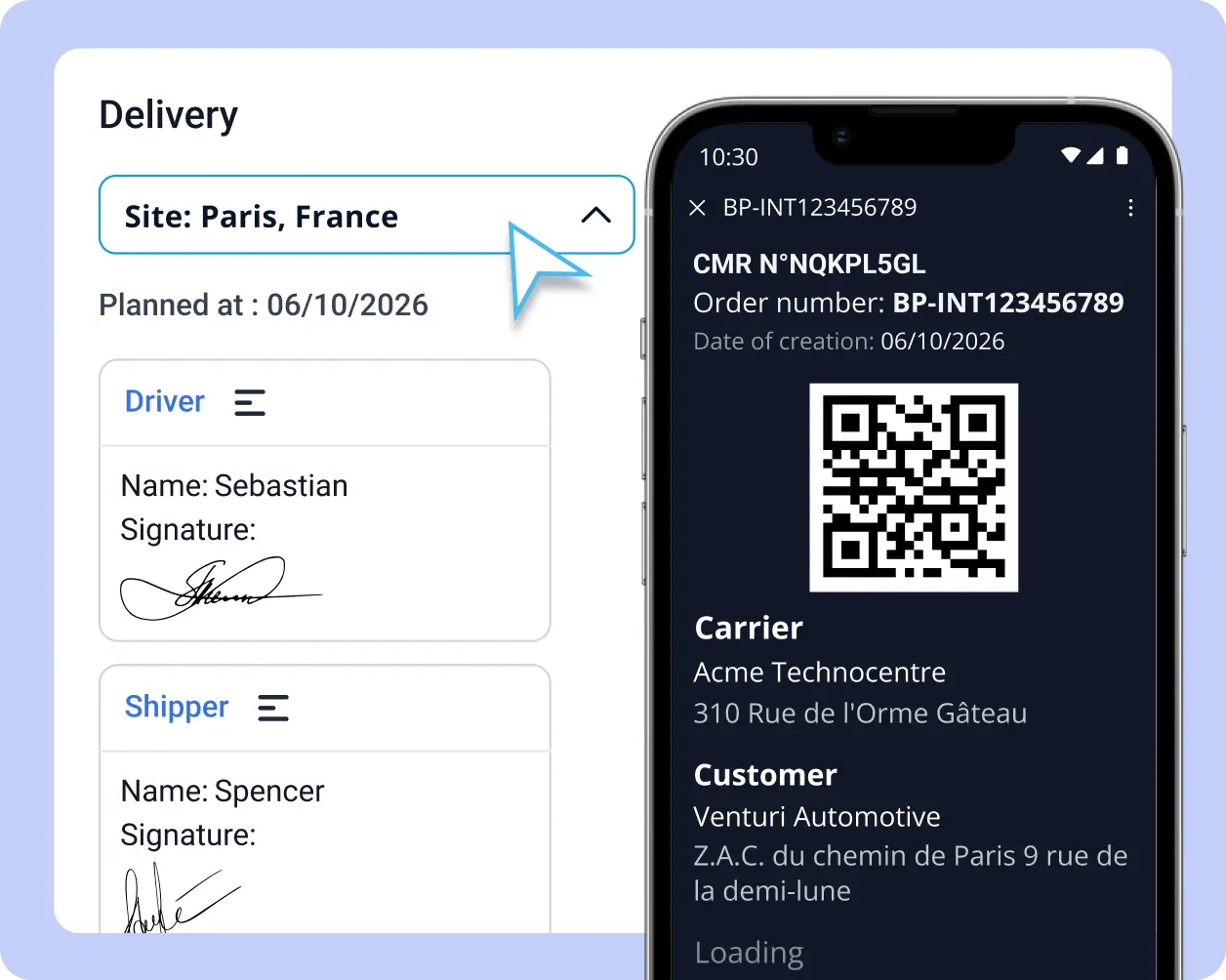
Operational control
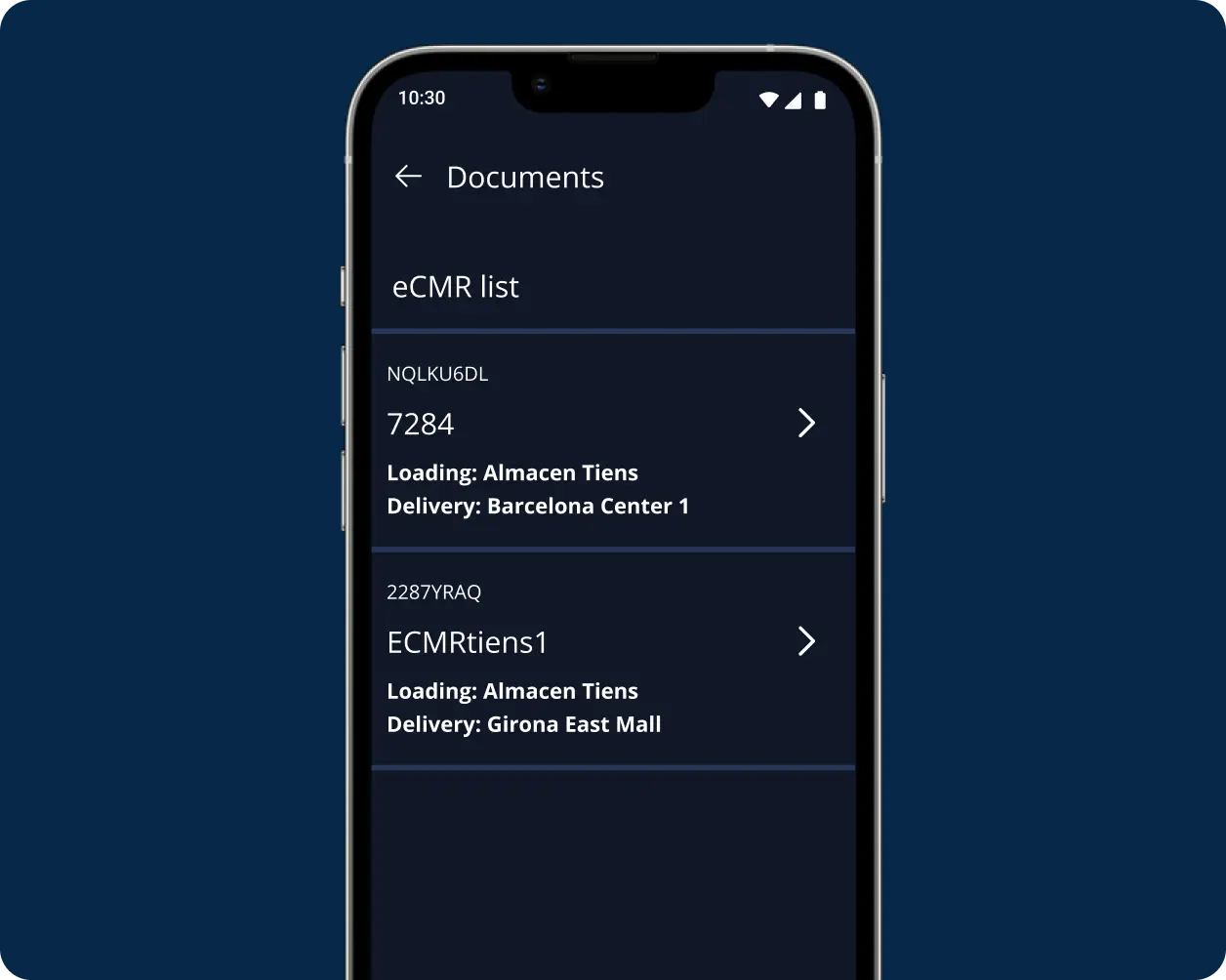
Track transport execution, document status, signatures, and shipment events in one place.
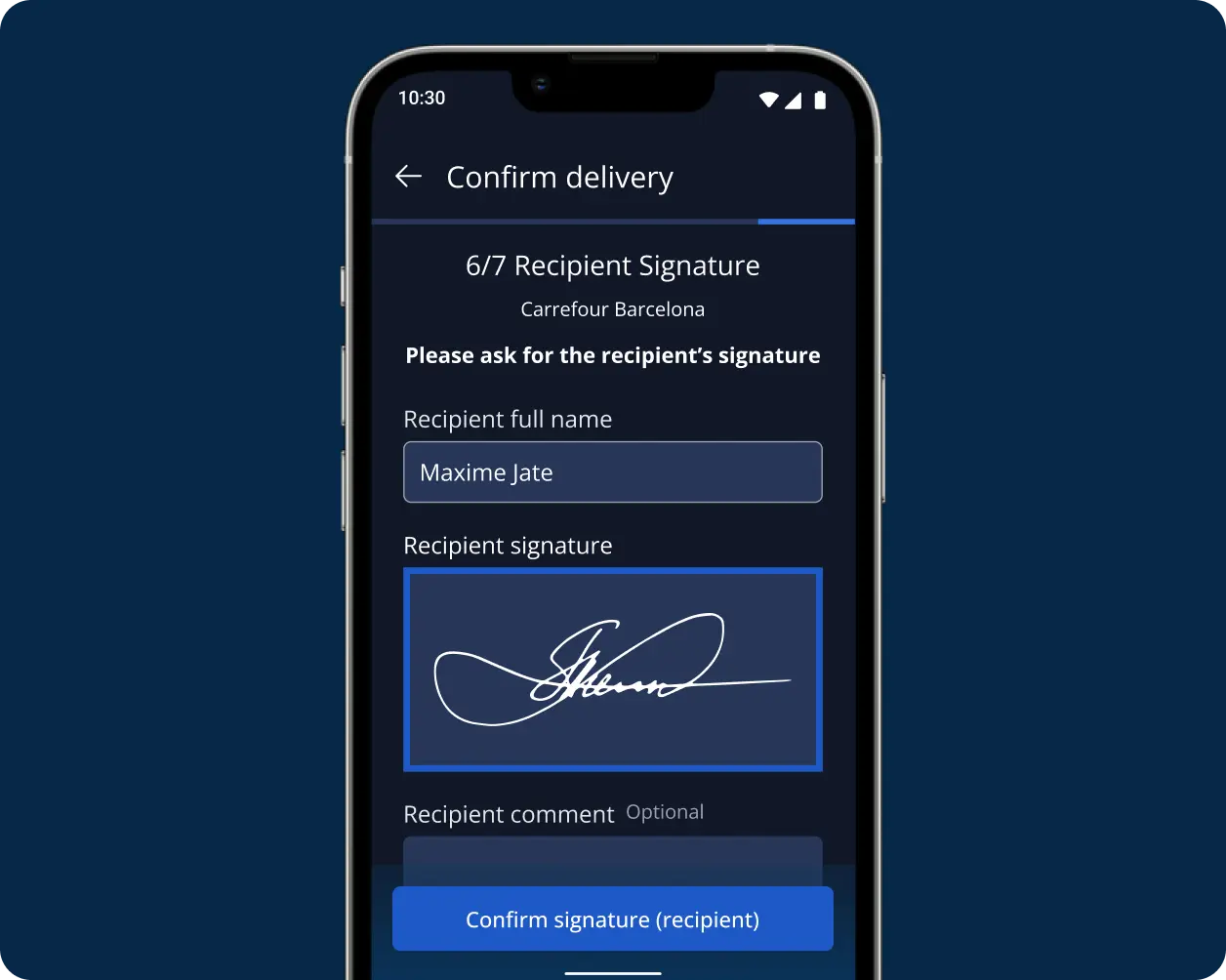
Why now
Regulatory changes and operational challenges are making digital transport documentation a business priority.
Why Shippeo eCMR
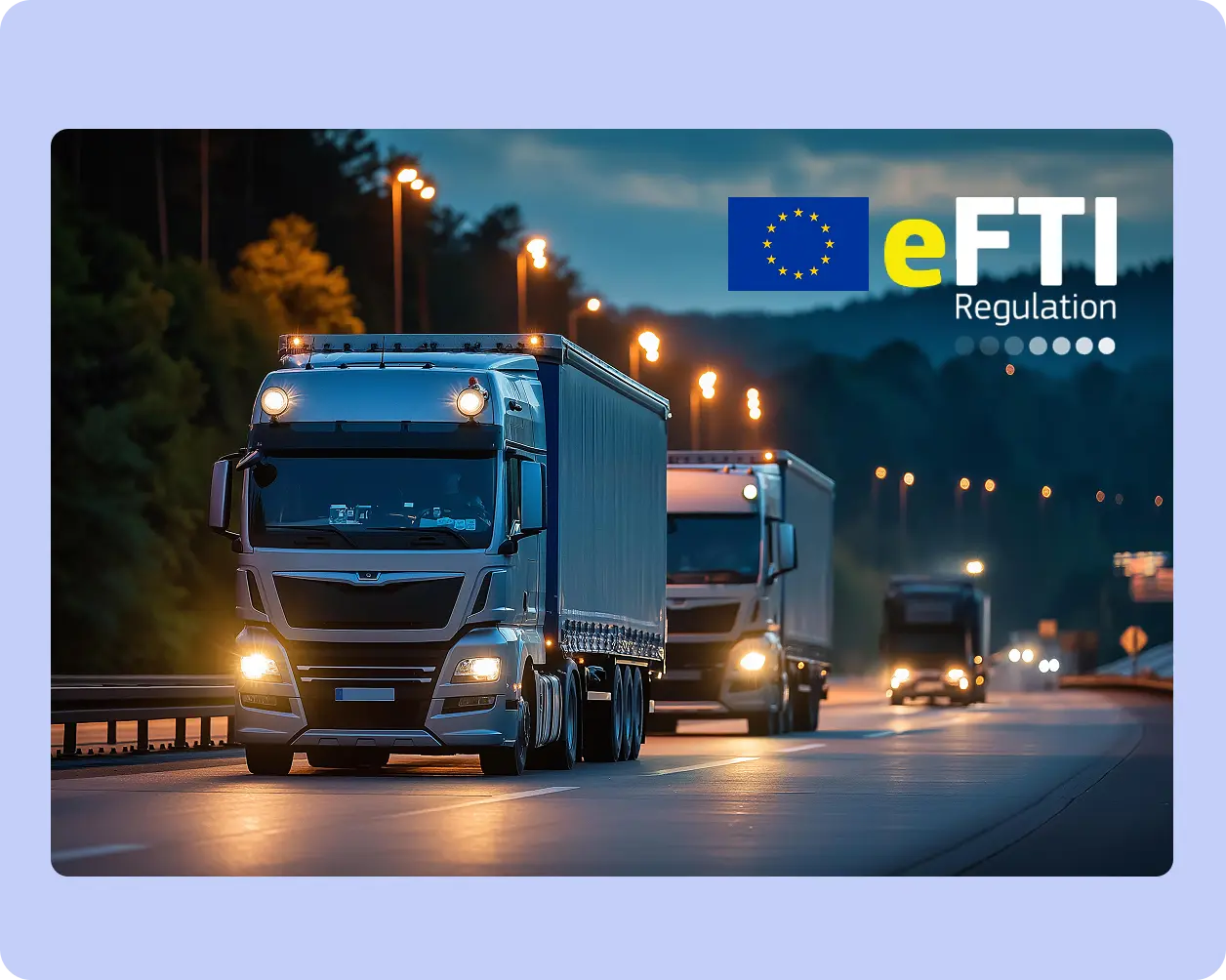
Shippeo follows official eFTI guidance closely and works with legal experts and industry stakeholders to align the solution with upcoming compliance requirements. In Spain, Shippeo has already completed the mandatory domain URL registration with the Ministry of Transport and Sustainable Mobility, ensuring compliance with current requirements for electronic transport control documents (DCA) ahead of the October 2026 deadline.
How it works
Use cases
Support common transport scenarios with flexible digital documentation workflows.
Frequently Asked Questions
What is an eCMR?
An eCMR (electronic consignment note) is the digital version of the paper CMR used in road transport. It is a legally binding contract of carriage between shipper, carrier, and consignee, covering the entire transport lifecycle from pickup to delivery.
What is the difference between eCMR and ePOD?
eCMR and ePOD serve different purposes:
- eCMR is a legal transport document covering the full shipment, including goods details, parties involved, and signatures at pickup and delivery
- ePOD (electronic Proof of Delivery) confirms that a delivery took place, usually at the end of the journey
An eCMR can serve as proof of delivery, but an ePOD alone is not sufficient to replace an eCMR.
Is eCMR legally valid?
Yes. eCMR is legally recognized under the CMR Convention Additional Protocol, provided that requirements such as data integrity, authentication, and traceability are met.
Is eCMR mandatory in Europe?
Not fully yet, but it is becoming increasingly important.
- The EU eFTI regulation (July 2027) will require authorities to accept digital freight information
- Some countries are moving faster, such as Spain, where digital transport documentation (ACD) becomes mandatory in October 2026
This means companies need to prepare now for upcoming compliance requirements.
Is eFTI already implemented and are solutions certified?
No, the framework is still being finalized.
While eFTI defines the legal obligation, most countries have not yet specified the exact technical implementation, and certification processes are not fully available yet.
Shippeo follows official eFTI guidance and works closely with legal experts and industry bodies to ensure its eCMR solution is aligned with upcoming requirements and ready for certification as soon as frameworks are finalized.
Why should companies implement eCMR now?
Implementing eCMR is not just a technical change, it requires coordination across shippers, carriers, and operations.
Projects typically take several months to deploy at scale, and early adoption helps companies:
- avoid compliance risks
- prevent operational disruption
- improve efficiency and invoicing cycles
What are the benefits of eCMR?
eCMR delivers measurable value across operations:
- Reduced paperwork and admin effort
- Faster invoicing and improved cash flow
- Lower transport costs
- Better dispute resolution with trusted data
- Audit-ready, compliant documentation
- Paperless, more sustainable processes