Engineering the future of supply chains: inside Visibility Now 2026
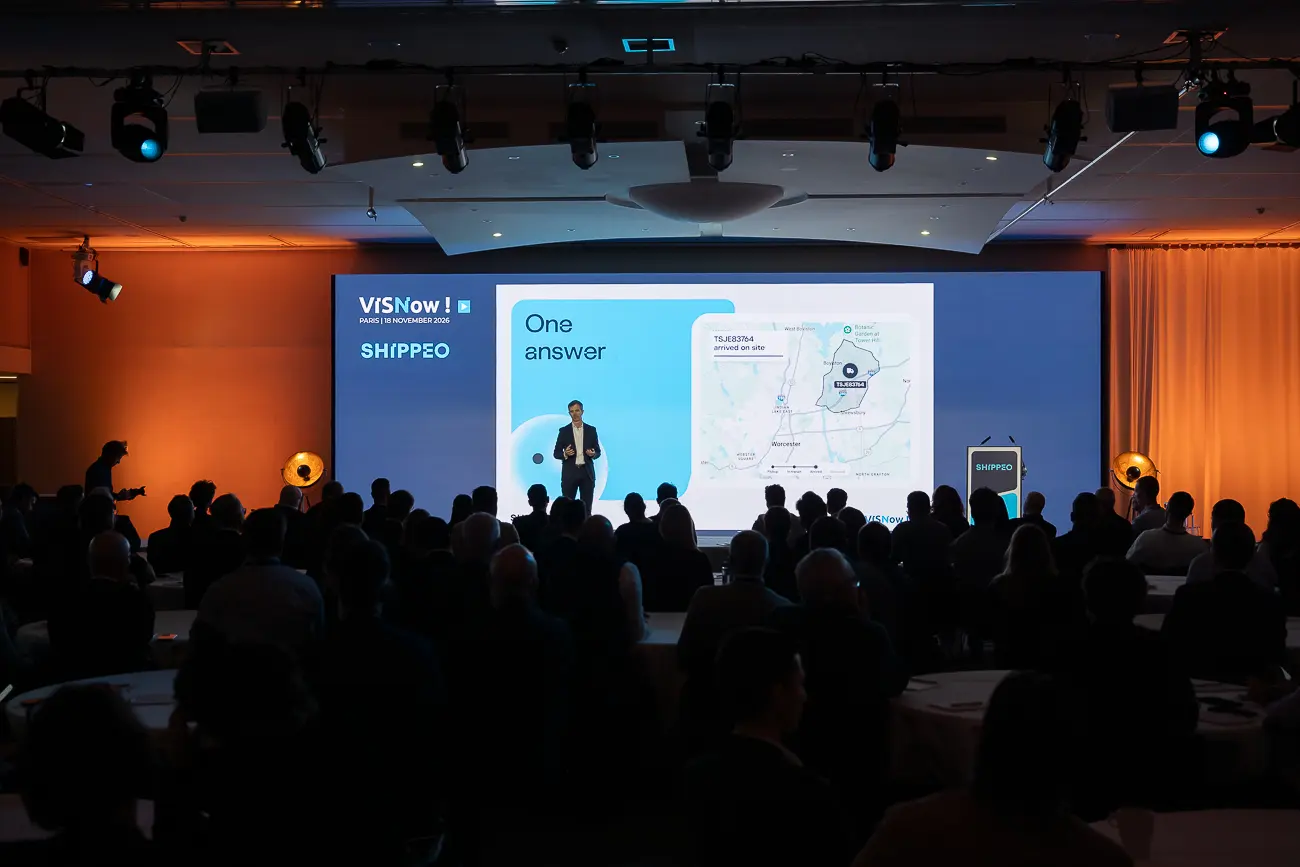
On 18 November, more than 100 supply chain and logistics leaders gathered for Visibility Now 2026. With insights from Stellantis, Lidl International, Leroy Merlin and more, the day explored how trusted visibility is built, how data is being put to work, and how AI is reshaping supply chain operations.
Reliable visibility has never been just about putting dots on a map. It takes carrier collaboration, quality data and continuous engineering to make that information trustworthy. And as AI transforms how supply chain teams work, that foundation matters more than ever.
That shift, from building trusted visibility to putting it to work in new ways, was a central theme at Visibility Now 2026. On 18 November, more than 100 supply chain and logistics leaders gathered in Paris to explore how trusted data, AI and connected operations are changing the way supply chains are managed.
Now in its seventh year, Visibility Now exists so that those conversations can happen in person. Rather than panels for panels’ sake or sessions that could have been a whitepaper, it brings together shippers, carriers and logistics providers to talk honestly about what visibility really takes, and what comes next.
Trusted visibility starts before the technology
Experienced practitioners know that connecting to a platform isn’t enough to deliver visibility. A platform can switch on connections, but on its own, it can’t make the information flowing through them reliable. Carrier onboarding, subcontractor complexity, milestone reliability and data quality aren’t afterthoughts to fix later. They are the core work, because the technology is only as good as what feeds it.
That’s the thinking behind what Shippeo calls visibility engineering: combining configurable technology with hands-on supply chain, data and integration expertise to engineer the connections, data and processes that make visibility work reliably in practice - and keep it working long after go-live. It’s the difference between visibility that looks good in a demo and visibility you can run an operation on.
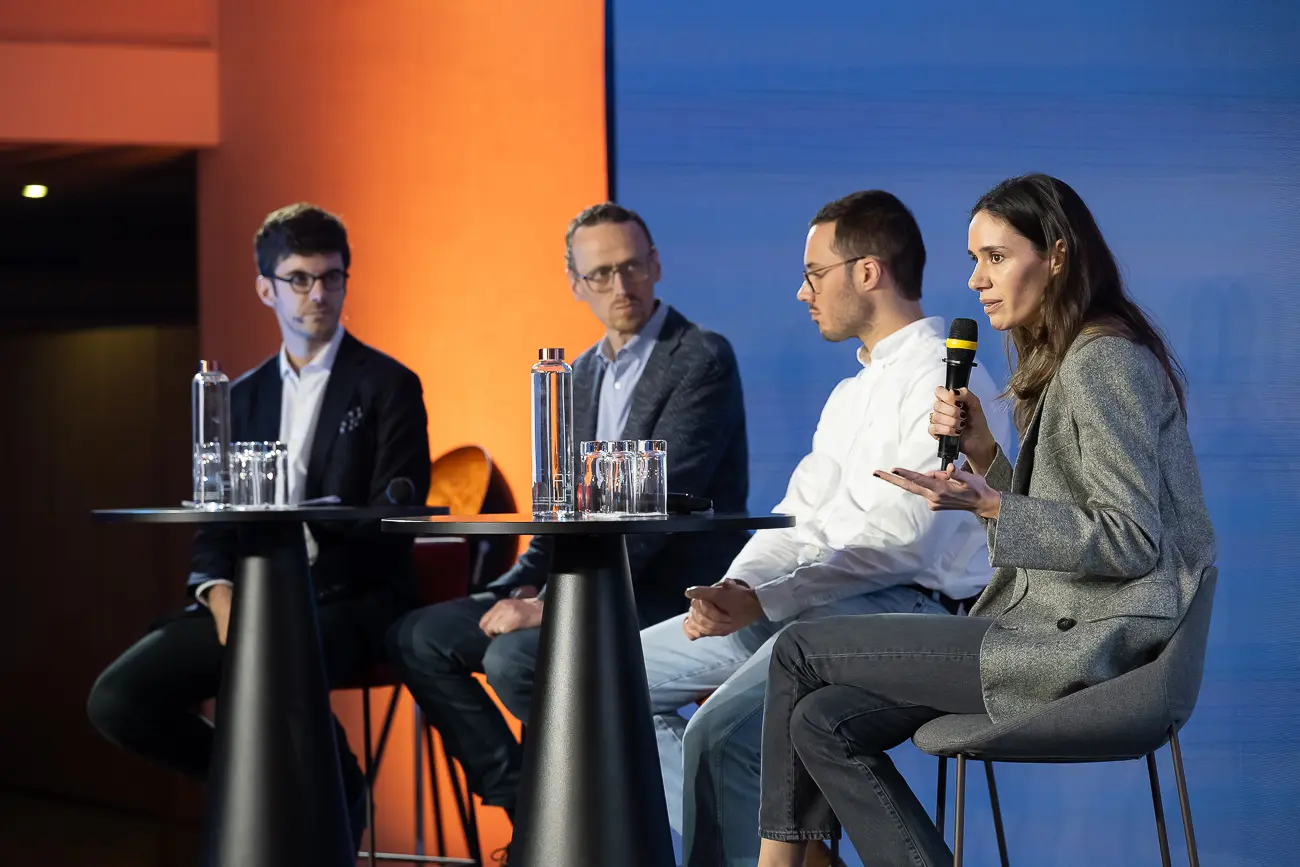
One of the day’s most candid conversations brought together a shipper, a carrier and a logistics service provider to unpack exactly this: what it genuinely takes to build trusted visibility across an ecosystem. The panel, moderated by Shippeo’s Alexandru Mihailenco, featured Anne Gijsbers of Interfood, Michael Reinshagen of LKW Walter and Bas Schoone of Caroz - three practitioners with different vantage points on the same challenge, and a track record of saying what they actually think.
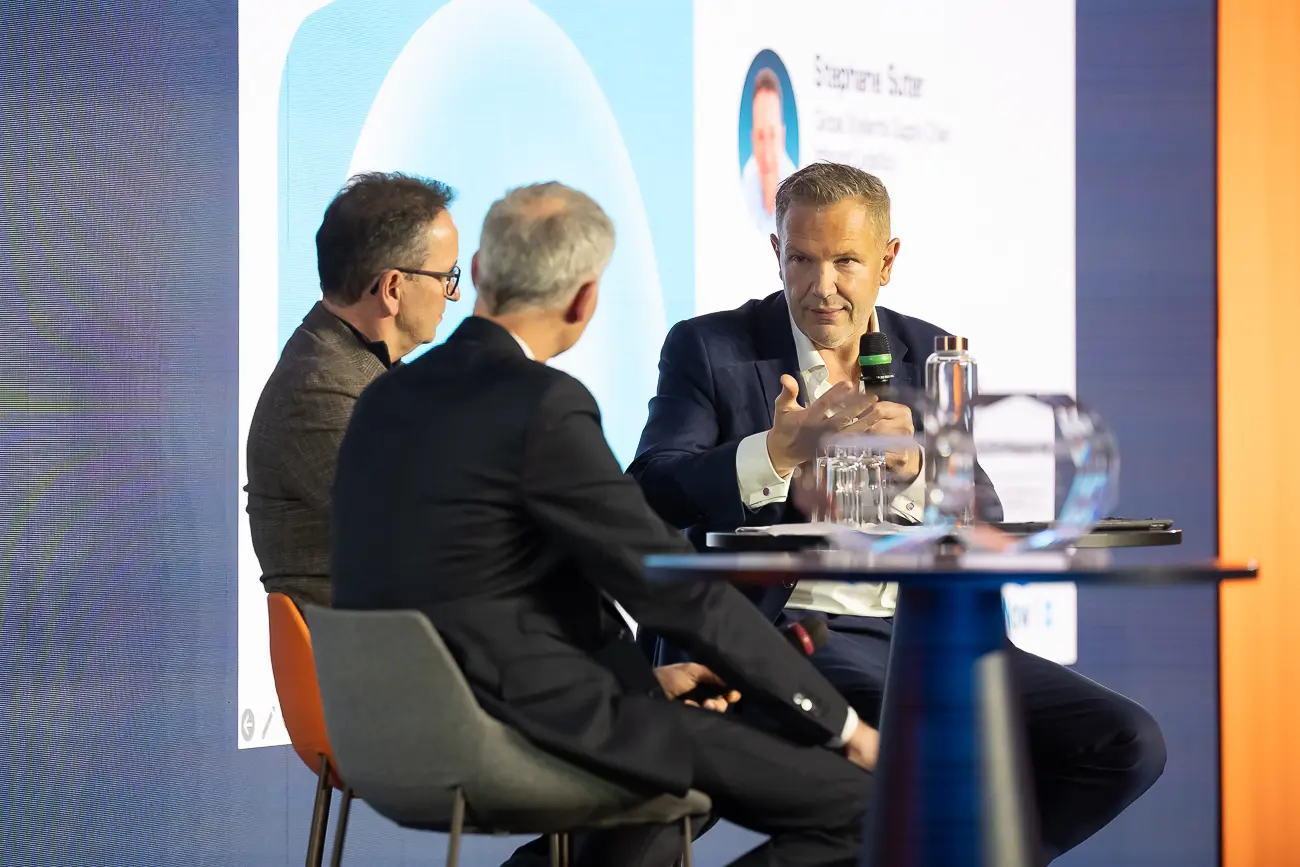
Stellantis joined Shippeo CEO Pierre Khoury for a fireside chat on a related challenge: what scaling trusted visibility looks like inside one of the world’s largest automotive manufacturers, an operation spanning 1.2 million trucks and over 2 million tracked orders, with 60+ carriers across more than 40 plants, multiple modes and multiple regions. Stéphane Suter (Global Supply Chain, Stellantis Parts Transport & Packaging, Inter-Regional Flows & Customs) and Brice de Zutter (Inbound Supply Chain, Enlarged Europe) were candid about the organizational and operational changes it required, and what they would do differently.
Putting trusted data to work
Knowing what’s happening to goods in motion is the foundation. After nearly a decade focused on engineering trusted transportation visibility, Shippeo is now putting that data foundation to work in a fundamentally different way. It’s about moving from a clearer picture to faster, better-coordinated action.
Lidl International tackled this directly. Sascha Brackelmann, Managing Director Network Strategy & Design Logistics, and Paul Puscas, Director Data Management & Logistics Performance, shared how they connected fragmented supply chain data with real-time visibility across a complex European logistics network, highlighting the organizational shifts that enabled their teams to move from reactive firefighting to proactive decision-making.
"Our belief is that, ultimately, visibility shows you how your supply chain really works: what the problems are, what you can do about them, and where orchestration will make the difference. That’s the game changer. Once you have the visibility, you can start to orchestrate."
- Sascha Brackelman, Lidl International
Lipton's Global Transportation Manager Umut Metin walked through a similar journey in ocean freight: building end-to-end visibility, getting ahead of disruptions, and keeping consignees informed without the manual effort that previously made that nearly impossible.
The questions the industry is still working out
Some of the most valuable sessions looked closely at emerging areas across the industry where teams are actively shaping best practices right now.
On AI: Many teams are already seeing what AI can - faster answers, deeper analysis, and less time lost to manual work. But there's a shared recognition that this is only the beginning, and that capturing the full value means rethinking how work gets done. A cross-industry panel - moderated by Shippeo VP Operations and Co-Founder, Thibaut Morlot and featuring Jonathan Falcomata of EPG and Anthony Plummer, Chief Solutions Officer at Ligentia - focused not only on what the AI opportunity means for the future, but on the organizational side of embedding it, sharing practical takeaways on what has to change so people and AI actually work well together.
On digital transport documentation: On digital transport documentation: As the EU’s electronic freight transport information (eFTI) regulation moves towards full European application and Spain’s DeCA goes live, teams are preparing for what this means for day-to-day operations. A session bringing together Shippeo’s legal and product teams alongside Andreas Nettsträter, CEO of the Open Logistics Foundation, and Julien Ghadar, Supply Chain Process Improvement Lead at Leroy Merlin, cut through the noise - covering what is required today, what is still evolving, and how to make eCMR part of everyday transport execution rather than a standalone compliance exercise.
"As the eFTI application approaches and some countries in Europe make digital transport documentation mandatory, we decided to move ahead in France. With more than 140 carriers working with us, standardization and interoperability are essential. That’s a big part of why we’re working with Shippeo on eCMR - they’re putting huge effort into both, which helps make eCMR part of everyday transport execution rather than a standalone compliance exercise."
- Julien Ghadar, Leroy Merlin
What makes the day worth coming back for
Visibility Now is a deliberately intimate event. With curated discussion formats and a focus on peer-to-peer exchange, the day gave people space to have the conversations that are harder to have in larger settings - with counterparts facing the same challenges, with companies a few steps ahead, and with the people building the tools they use every day.
Attendees also got an early look at where Shippeo is heading next, as it marks a shift to AI-first visibility. The announcements included the next generation of Shippeo AI - already used by 80% of Shippeo customers - which changes how teams access information, uncover insights and act on them. A live demonstration showed how trusted transport information connects with the wider context and workflows around each shipment, with AI helping teams understand what’s happening and coordinate what comes next. Read our latest press release to find out what else we unveiled.
Vous souhaitez suivre l'actualité de Shippeo ?
Derniers articles et lancements de produits.



Poursuivez la lecture

Recevez notre newsletter
Pour les derniers insights supply chain