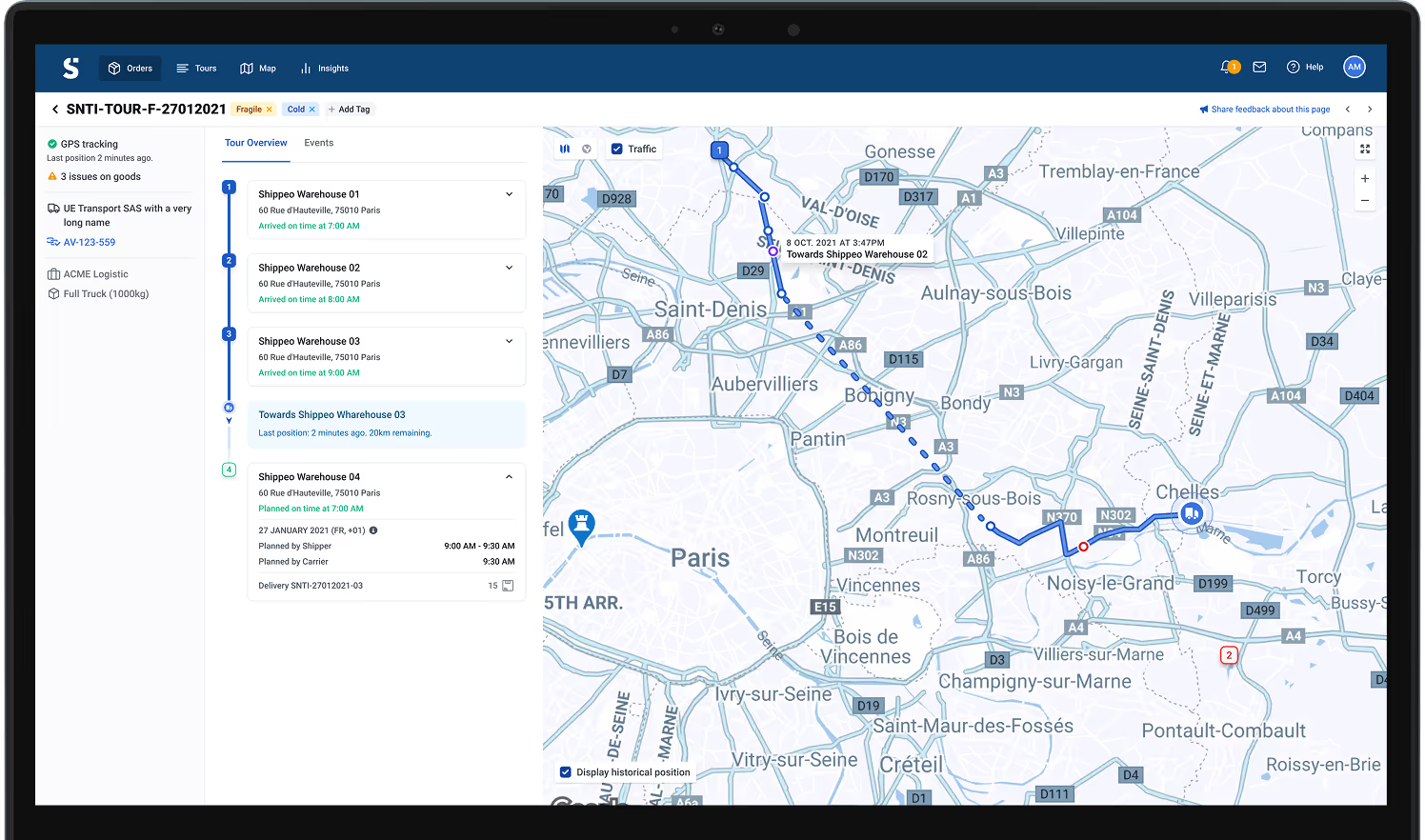
Simplify compliant eCMR management across your transport network
Digitize the consignment note and connect documentation to transport execution. Shippeo eCMR helps shippers, carriers, and consignees manage legally valid transport documents, capture trusted signatures, and access compliant records instantly across the shipment lifecycle.

Up to €13
saved per consignment note
Up to 1.5%
transport budget savings
Weeks to minutes
for invoicing readiness
Digitize your consignment notes with less friction

Go beyond document digitization with execution-connected eCMR
Shippeo eCMR does more than replace paper. It turns the consignment note into a live execution record, linked to transport events, quantities, signatures, and issue handling in one connected workflow.
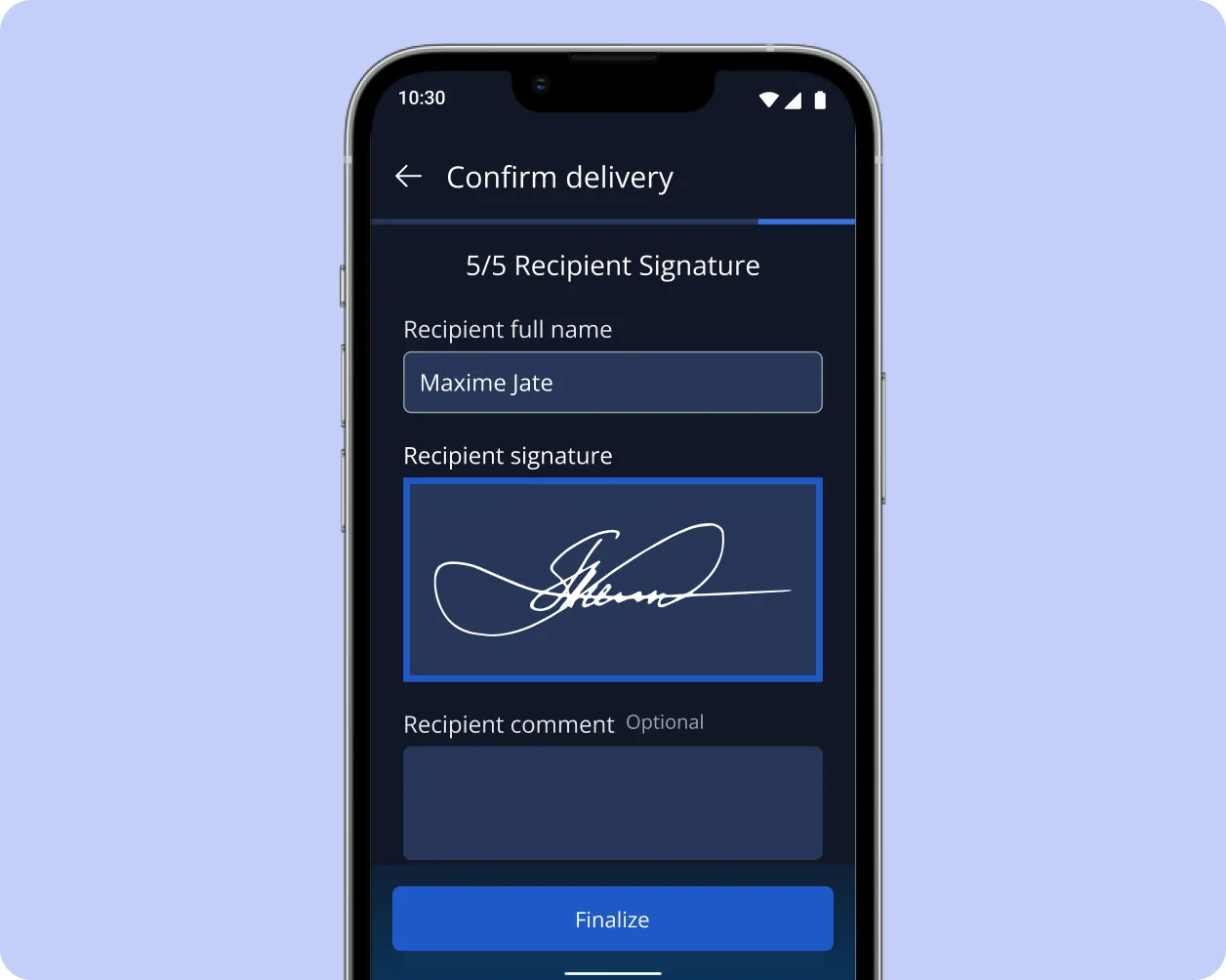
"With Shippeo's mobile app, drivers can declare everything in real-time, including pallets, and even parcels. If it didn't show a deep understanding of the added value it brings the drivers, they wouldn't use it"
Transportation Director
FM Logistics

Frequently Asked Questions
What is an eCMR?
An eCMR (electronic consignment note) is the digital version of the paper CMR used in road transport. It is a legally binding contract of carriage between shipper, carrier, and consignee, covering the entire transport lifecycle from pickup to delivery.
What is the difference between eCMR and ePOD?
eCMR and ePOD serve different purposes:
- eCMR is a legal transport document covering the full shipment, including goods details, parties involved, and signatures at pickup and delivery
- ePOD (electronic Proof of Delivery) confirms that a delivery took place, usually at the end of the journey
An eCMR can serve as proof of delivery, but an ePOD alone is not sufficient to replace an eCMR.
Is eCMR legally valid?
Yes. eCMR is legally recognized under the CMR Convention Additional Protocol, provided that requirements such as data integrity, authentication, and traceability are met.
Is eCMR mandatory in Europe?
Not fully yet, but it is becoming increasingly important.
- The EU eFTI regulation (July 2027) will require authorities to accept digital freight information
- Some countries are moving faster, such as Spain, where digital transport documentation (ACD) becomes mandatory in October 2026
This means companies need to prepare now for upcoming compliance requirements.