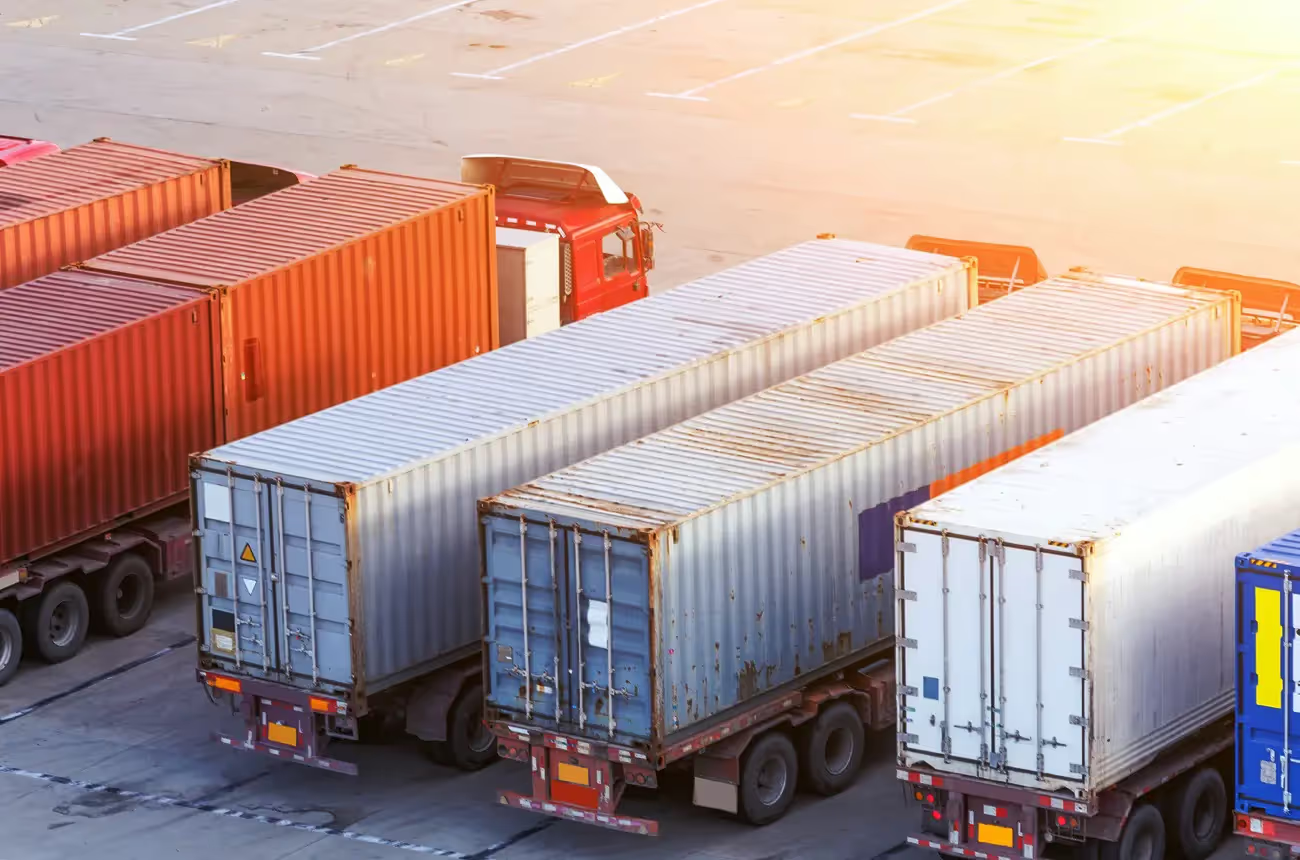
Global supply chains have faced intense pressure in recent years, from driver shortages and port congestion to health crises and rising environmental regulations. At the same time, companies are expected to reduce logistics costs while delivering higher service levels and adapting quickly to shifting customer demands.
The solution? Supply chain visibility; especially real-time, predictive transportation visibility.
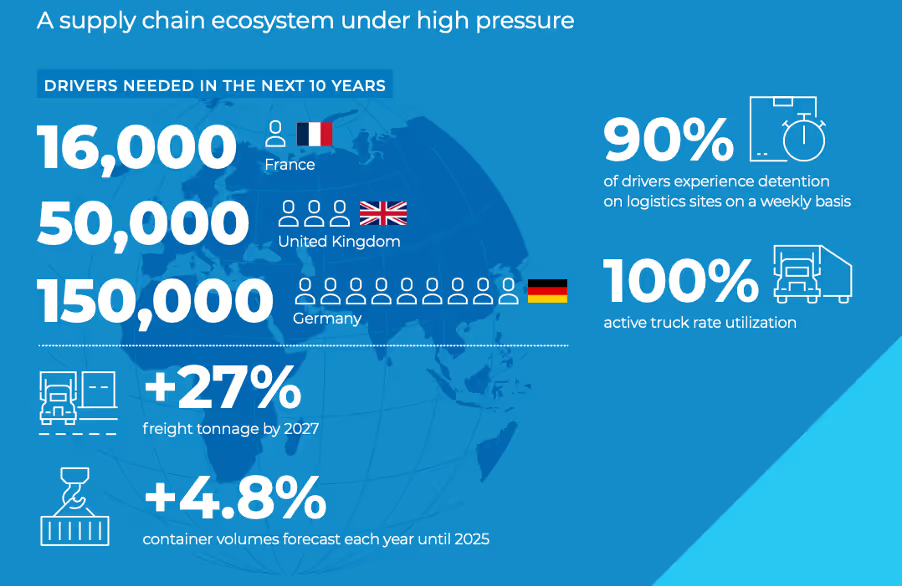
A study by ASLOG estimates that logistics costs represent, on average, 12% of a company’s overall costs, and that transportation alone accounts for more than 50% of these costs. In its "Global Supply Chain Survey" report, PwC estimates that companies whose logistics practices are flexible and responsive to issues and operational constraints, achieve a delivery performance that is nearly 30% higher than that of companies who lag behind in this area.
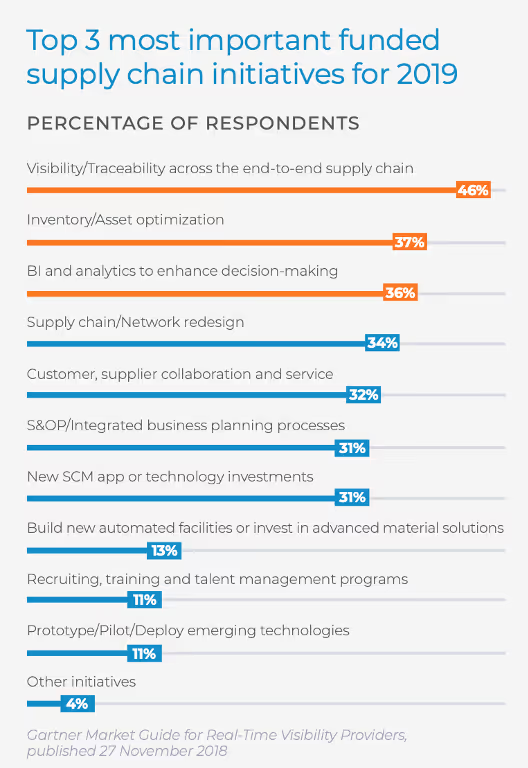
According to IBM, 87 percent of chief supply chain officers (CSCOs) say it is extremely difficult to predict and manage supply chain disruptions and 84 percent of them cited lack of visibility as their biggest challenge. Furthermore, according to Gartner, “visibility is among the top three funded investment initiatives prioritized for many (46%) supply chain organizations”
Transportation visibility is gaining momentum, fast becoming a ‘must-have’ solution for many organizations, regardless of size, geography or industry. The applications for real-time supply chain visibility technology are becoming more universally understood and appreciated. Thanks to the advent of machine learning, visibility capabilities are now moving from ‘standard’ to ‘predictive’, allowing for more automation of processes and more precise and reliable ETA predictions.
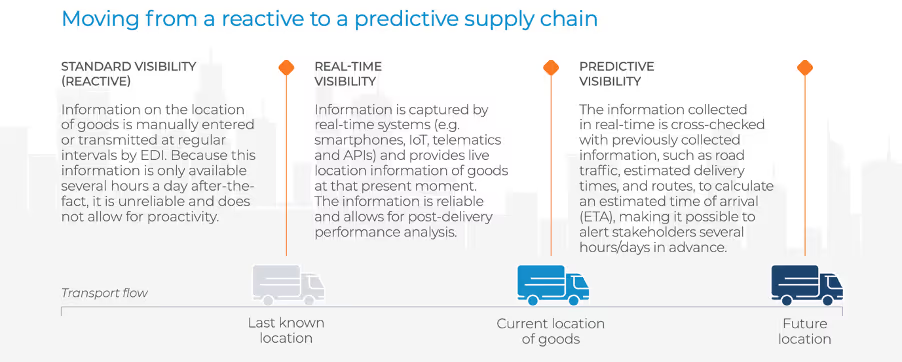
Predictive real-time transportation visibility is key to achieving a more robust and competitive supply chain, enabling dramatic improvements in five key areas:
1. Elevating Customer Experience with real-time transparency
End-customer expectations of a B2B delivery experience have evolved to meet those of consumer experiences (what's known as the ‘Amazon effect’). However, B2B supply chains are becoming increasingly complex and fragmented making deliveries far more challenging to monitor. For this reason, many supply chains contain visibility blind spots, where the status or whereabouts of a shipment is completely unknown, potentially for days or weeks. In many cases, shippers only become aware of delays once an end-customer complains about a late delivery, negatively impacting NPS and sometimes incurring additional costs such as penalties. What’s more, customer service teams waste a lot of time manually following up on customer queries about late deliveries, rather than focusing on tasks that could be adding greater operational value.
2. Enabling Data-Driven Performance Management
Blind spots in supply chains prevent valuable insight from reaching management. Without digital automated visibility, companies rely on manual reporting using disparate computer systems or even paper forms, leading to inaccuracies, lack of objectivity and delays in receiving information. This makes measuring OTIF (On-Time In-Full) and other metrics difficult, especially when subcontracting carriers, which in turn hinders the ability to optimize operations and avoid the costs of inefficiencies and late delivery penalties.
3. Minimizing Disputes and transportation litigations
When things go wrong in transit, resolving disputes can be a slow, paper-heavy process. Paper-based CMRs (Bills of Lading) are often delayed and incomplete. Visibility platforms that support electronic documentation and real-time tracking allow teams to quickly analyze issues, attach photo evidence, and resolve claims more efficiently.
4. Boosting Operational Efficiency
Without visibility, inefficiencies add up—especially at delivery sites. Poor coordination leads to long dwell times, missed slots, and bottlenecks. Predictive tracking enables smarter dynamic slot booking, improved carrier coordination, and better use of dock resources, ultimately saving time and reducing costs.
5. Building Resilient, Demand-Responsive Supply Chains
Supply chains today are leaner and more complex. Just-in-time models, same-day delivery expectations, and perishable goods all increase the need for reliability and agility. Real-time transportation visibility helps detect issues earlier, adapt faster, and keep goods flowing efficiently to the point of sale.
There are countless other examples of how Shippeo’s visibility solution can add value to supply chains across all industry sectors. The platform provides multimodal end-to-end visibility, even when multiple transportation modes are used. Notifications about predicted delays (or early arrivals) are automatically shared with relevant parties, allowing for more efficient dynamic slot bookings helping to reduce dwell times and helping to minimize the risk of costly stockouts. Accurate shipment status data makes it simple to measure delivery performance and focus on exceptions. It’s also possible to record an electronic version of the CMR (Bill of Lading), allowing for more detailed documentation, photo attachments and which are instantly retrievable when required.
Find out more in our white paper 5 reasons why you need supply chain visibility or visit Shippeo’s blog or e-books resource center for more insights.
Latest blogs & product releases.
Authors