Key points
- Automotive manufacturers are increasingly using CKD/SKD shipments due to tariff pressures and localization demands, despite logistical challenges
- While offering flexibility, CKD/SKD models introduce costly, complex logistics and risks to efficiency and quality
- Container-level visibility is insufficient for CKD/SKD shipments, as even one delayed component can halt assembly
- Real-time, multi-modal, SKU-level transportation visibility is crucial for managing complexity and ensuring resilient manufacturing.
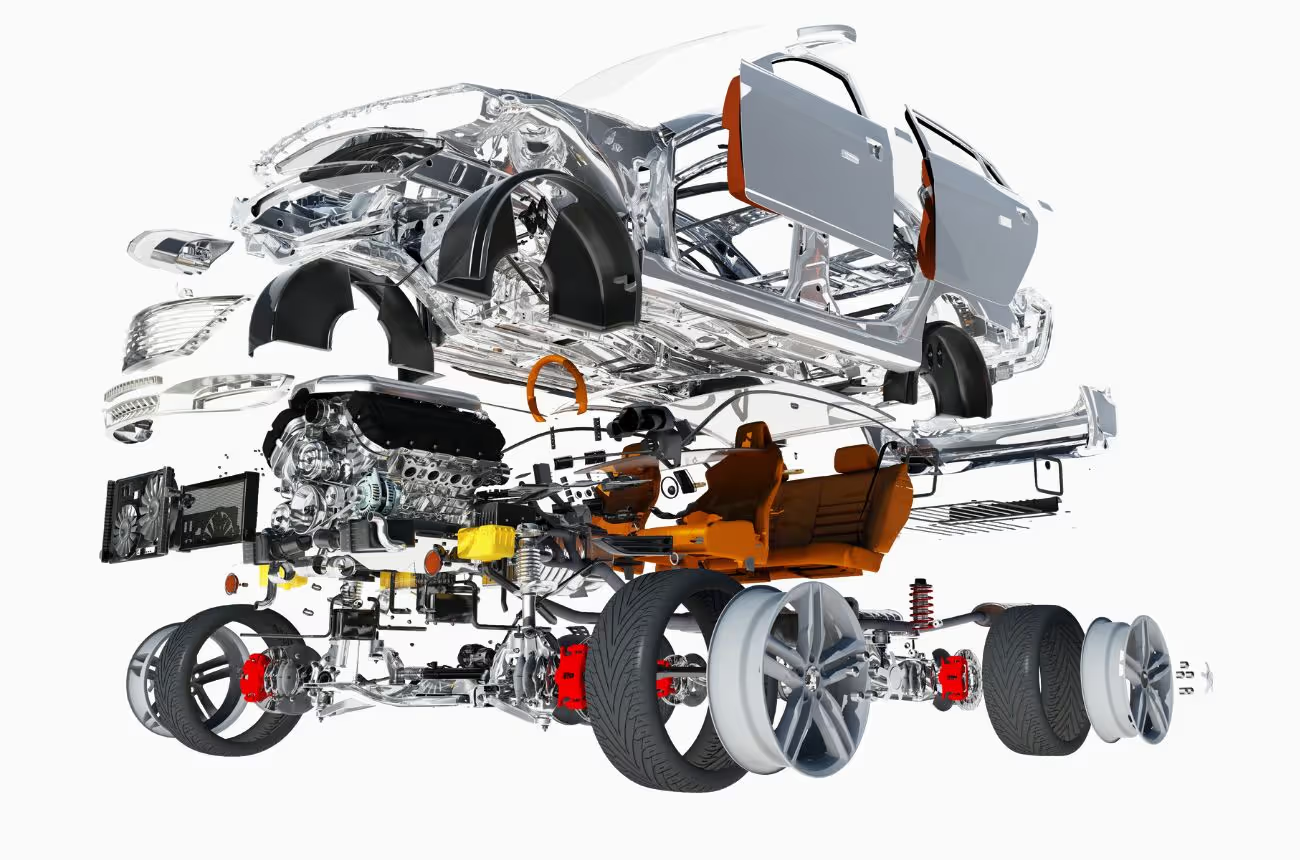
As the global automotive trade shifts under the pressure of tariffs, localization demands, and supply chain disruption, car manufacturers are increasingly looking into shipping partially or fully disassembled cars; processes respectively known as SKD or CKD. Such processes offer flexibility, but also introduce complexity.
This is where real-time, multi-modal visibility, right down to the SKU (stock-keeping unit) level becomes not just useful, but essential.
What are CKD & SKD?
- CKD (Completely Knocked Down): Vehicles are shipped in fully disassembled form. Often hundreds of components, and reassembled in the destination country.
- SKD (Semi Knocked Down): Partially assembled vehicles are shipped, with final assembly completed locally.
Both models are tactical tools used by OEMs to:
- Circumvent high import duties on fully assembled vehicles
- Comply with local content rules and government incentives
- Capitalize on lower labor costs and local assembly potential
Why Isn’t CKD/SKD the default solution?
While attractive on paper, CKD and SKD come with trade-offs. Here's a balanced view:
Pros
- Avoid high tariffs
- Boost local job creation
- Access protected markets
- Adapt to local demand quickly
Cons
- Costly and complex logistics
- Loss of factory-scale efficiency
- Risk of inconsistent quality
- Not always legally viable or economically scalable
That’s why most OEMs use them selectively, as tactical responses to challenges like tariff-induced supply chain disruptions; not as blanket strategies.
Real-world Usages
Global manufacturers deploy CKD/SKD where the economics make sense, as they are a trade-off between full local production as opposed to kit importation. For example:
- BMW plans to increase production of SUVs in Spartanburg (US) to avoid tariffs, then re-export globally
- Volvo shifted production of the XC60 to South Carolina in response to US tariff threats
- Hyundai/Kia and others localize production via CKD in North Africa, Vietnam, and India and aims to double exported CKD volume by 2030.
This model allows OEMs to maintain market presence without full-scale factory investment; but it demands precision in logistics & transportation.

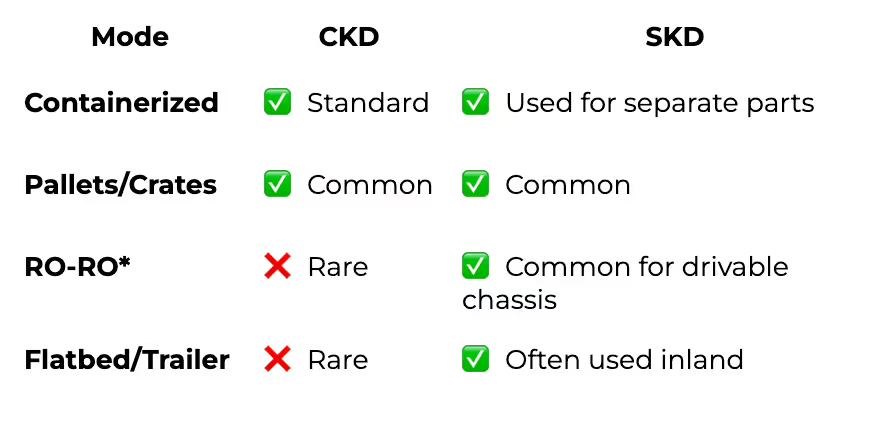
What are the typical CKD/SKD transport methods?
Where does Real-Time Visibility come in?
When a CKD shipment contains hundreds of critical components, visibility can’t stop at the container level. The risks are real:
- If a single container carrying steering racks or dashboards is delayed, the entire reassembly process halts
- When SKD kits arrive by Ro-Ro, but a shipment of infotainment systems is stuck in customs, parked vehicles pile up.
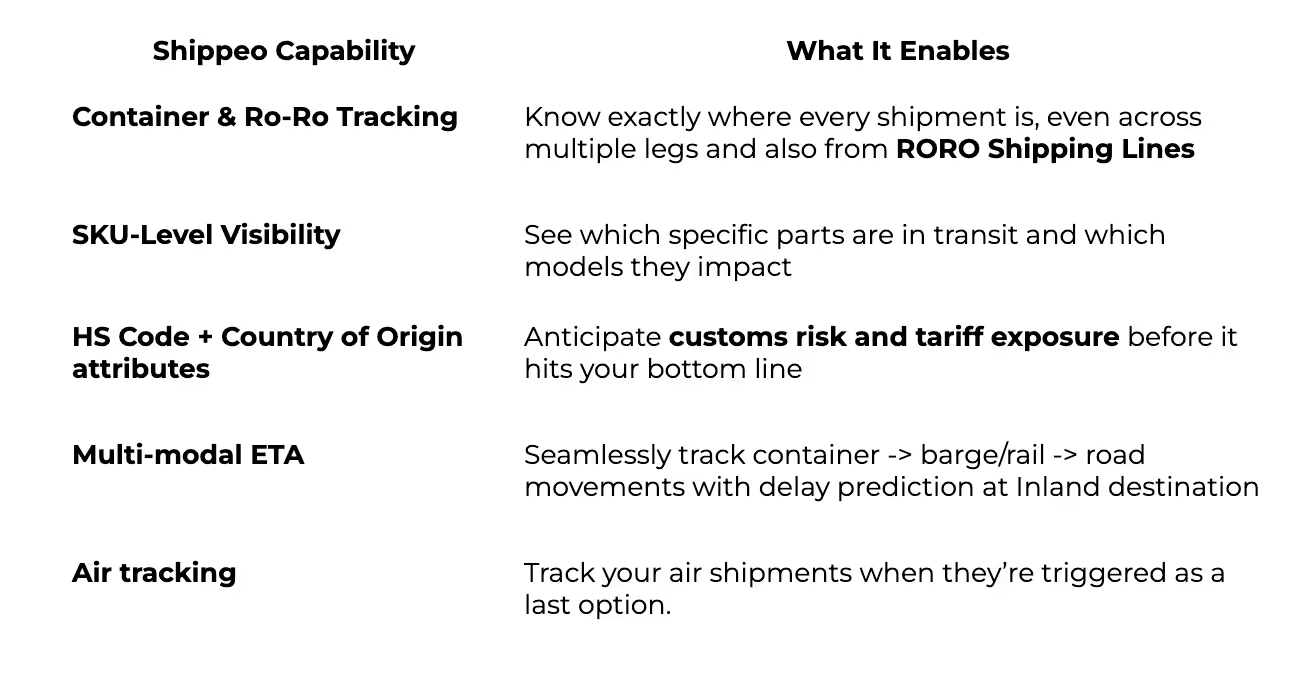
To manage this complexity, OEMs need real-time tracking across all modes, linked to the actual parts inside — down to the SKU level.
This is where visibility platforms like Shippeo bring game-changing value:
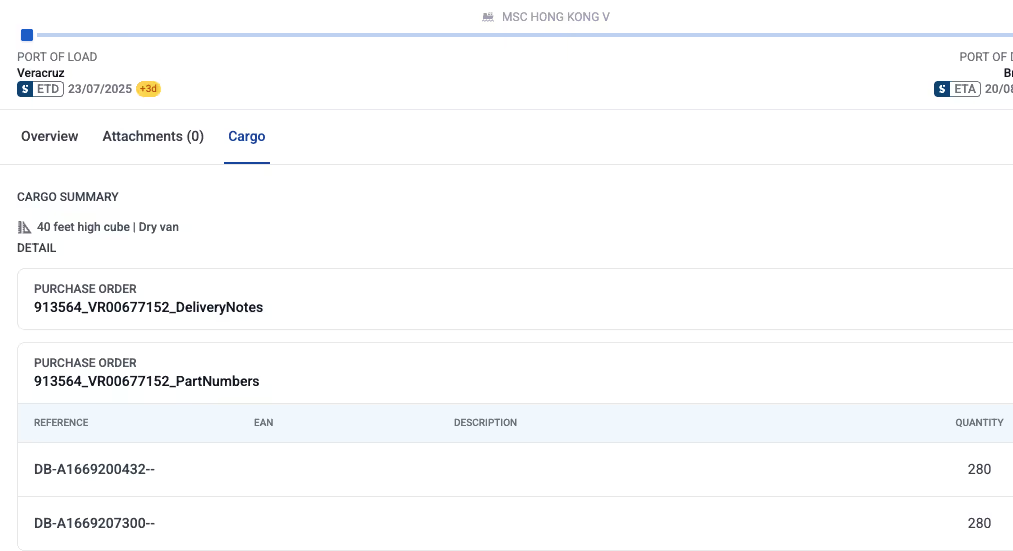
Final thought: tracking SKUs in real-time is a modern manufacturing reality
Imagine being able to search for a specific lithium battery variant, or a left-hand drive dashboard, and instantly locate:
- Which container it’s in
- What vessel it's aboard
- When it’ll be gated-out from the port
- When it’s arriving at the final plant.
For CKD and SKD logistics, this is no longer a nice-to-have. It’s now a requirement for resilient, scalable manufacturing under tariff pressures.
In a world of shifting trade policy and volatile shipping lanes, CKD and SKD offer flexibility. But without SKU-level visibility, that flexibility becomes fragility.
Real-time tracking, enriched with part-level data and customs intelligence, is the key to keeping assembly lines moving, and staying one step ahead of uncertainty.
Latest blogs & product releases.
Authors


Frequently Asked Questions
What are CKD/SKD shipments in the automotive industry?
CKD (Completely Knocked Down) and SKD (Semi Knocked Down) shipments involve shipping partially or fully disassembled cars for reassembly in other locations.
Why are automotive manufacturers increasingly using CKD/SKD shipments?
Manufacturers are adopting CKD/SKD models to circumvent high import duties, comply with local content rules, and capitalize on lower labor costs in different regions.
What are the main challenges associated with CKD/SKD shipments?
These shipments introduce significant logistical complexity, can be costly, may lead to a loss of factory-scale efficiency, and pose risks of inconsistent quality.
Why is SKU-level transportation visibility crucial for CKD/SKD shipments?
Real-time, multi-modal visibility down to the individual component (SKU) level is essential because a delay of even a single part can halt the entire reassembly process and impact production.