

As transportation networks become larger, more layered and complex than ever, navigating a range of shifting regulations and challenging economic climates is increasingly difficult for logistics service providers.
From 2PLs’ delivery-focused services spectrum all the way through to emerging supply chain network- focused 5PLs, providers face a variety of environmental, operational and service-oriented challenges.
The frequency and duration of supply chain disruptions is growing at an unprecedented rate within increasingly unpredictable economic climates, rife with political instability, bullwhipping the price of fuel, and lack of driver capacity accelerated by changing regulations.
Organizations are facing a raft of operational challenges, from rising transportation costs, to personnel and capacity shortages and long and slow communication chains. What’s more, competition within the logistics services market has never been higher.
Limited visibility of the status of trucks or shipments affects organizational resilience and agility, while at the same time frustrating customers who increasingly expect to be able to track and trace shipments, and know their status in real time, through any stage of an order cycle. All the while, logistics service providers are expected to transport goods faster, more efficiently and at a lower cost.
Increasingly, shippers are enlisting the support of logistics service providers to manage a portion of their supply chain. The extent to which depends largely on how much control they’re willing to relinquish and what sort of capabilities and expertise they require externally.
As industry experts, logistics service providers are turning to new technologies and IT solutions to unlock smarter, leaner modes of operation and to better differentiate themselves and their services within a highly competitive landscape.
Real-time transportation visibility platforms (RTTVP) have quickly become a desirable foundational pillar within providers’ digitalization strategies, aggregating and sharing real-time data to facilitate better collaboration amongst ecosystem partners, while also transforming the data into predictive insights that unlock the ability to automate transportation and logistics processes. The resulting high-level benefits allow logistics service providers to significantly streamline operations and associated costs, while boosting customer satisfaction and growing market share with enhanced offerings.
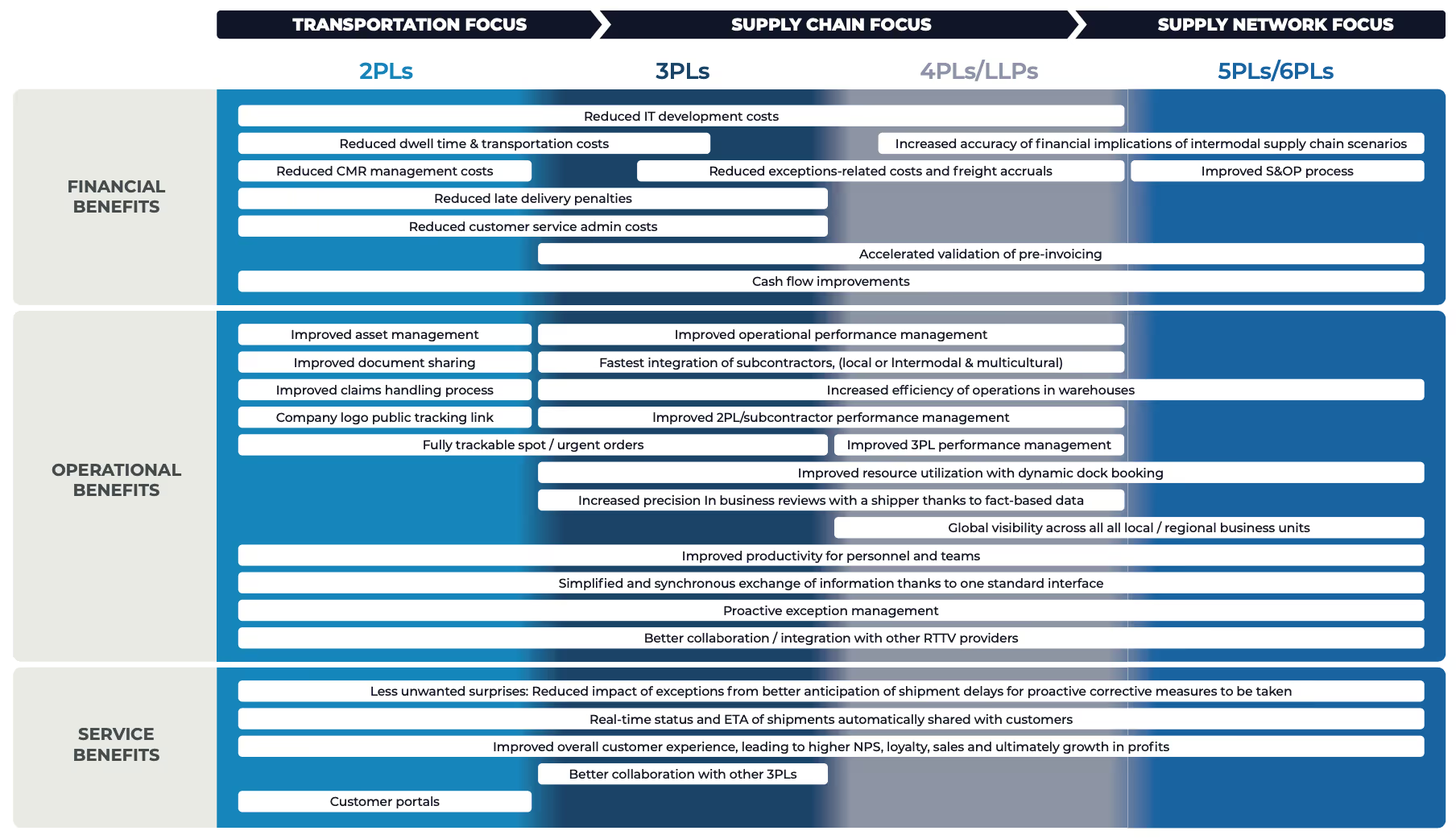
There are dozens of ways RTTVP can bring benefits for logistics service providers, with five key ones being:
- Improved customer satisfaction
- Optimized operations, processes and team productivity
- Greater ecosystem collaboration
- Better performance measurement and improvement
- Standing out from the competition
Learn more about how RTTVPs help achieve all five in our new white paper “Why logistics service providers are leveraging real-time visibility to stay competitive”, or get in touch with our team of experts today.
Latest blogs & product releases.
Authors